How Chinese craft beer developed
The first wave of Chinese craft beer did not start with Chinese brewers. In the 2000s, expatriate communities in Beijing and Shanghai built the initial demand infrastructure: import bars, brewpubs, and American- or German-trained brewers supplying a customer base that had encountered craft beer abroad and wanted it at home. Places like Great Leap Brewing in Beijing — opened in 2010 — represented the pivot point where that expatriate scene began reaching a local Chinese customer. The styles were Western, the prices were high, and the audience was small but vocal and influential within the dining-out culture of China's first-tier cities.
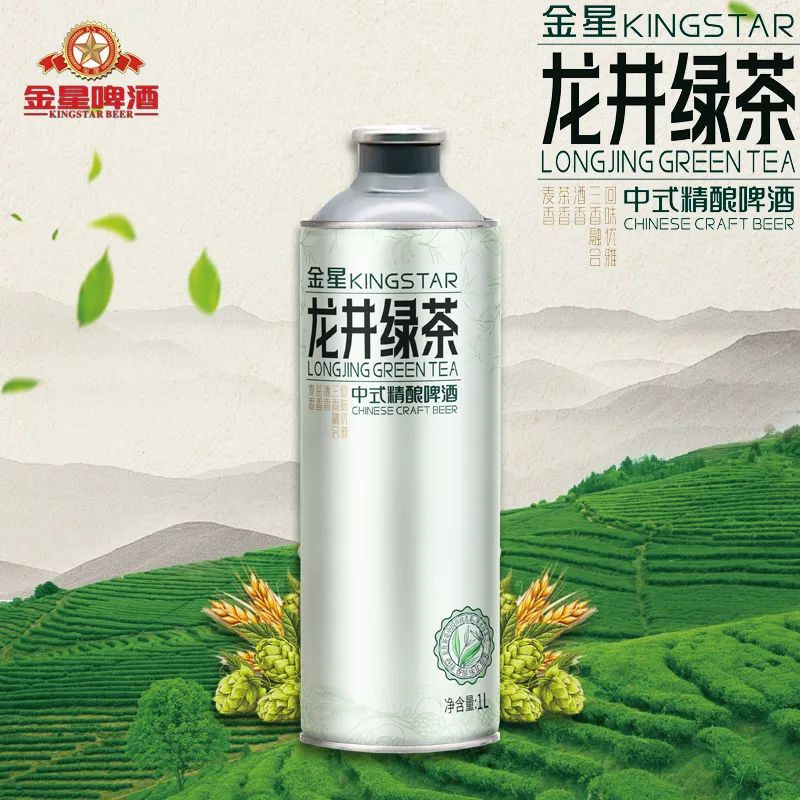
The second wave ran roughly from 2012 to 2018 and is where the category became genuinely Chinese. A generation of Chinese brewers trained abroad or under foreign mentors returned to build their own operations, and they brought with them an instinct to brew with what China actually grows: locally sourced tea, heritage grain varieties, regional botanicals, and domestic fruit. This was not nostalgia — it was a market positioning move. Imported beer could not replicate a beer brewed with 2015-harvest Longjing from West Lake, and Chinese mass lager could not compete on complexity or story. The second wave found the gap between them and built a category there.
The third wave, ongoing since 2019, is defined by two forces pulling in opposite directions. The first is premiumization and consolidation: Tsingtao, Snow (CR Beer), Yanjing, and Harbin have all acquired craft sub-brands or launched craft lines, bringing distribution muscle, cold chain, and marketing budgets into a category that had operated on passion and word of mouth. The second is a countervailing push from independents toward radical provenance — single-source ingredients, named harvest years, specific geographic appellations — because that is the territory the nationals cannot easily occupy without destroying the premium positioning they paid for. The craft beer category in China is now a genuine two-tier market.
Who is buying craft beer in China
The primary craft beer consumer in China is urban, 25–40 years old, has some degree of international exposure through travel, education, or media, and is comfortable paying a 5–6x premium over a mass lager at retail. The floor price that signals "craft" in Chinese retail is approximately 15–20 RMB per 330ml unit; mainstream premium craft sits at 30–60 RMB. This consumer is not buying on alcohol value — they are buying on identity, taste complexity, and the social signal of the product in their hand or on their table.
Geographically, the core market remains concentrated in first- and second-tier cities: Beijing, Shanghai, Guangzhou, Chengdu, and Hangzhou account for a disproportionate share of craft volume, driven by bar and restaurant density, higher average disposable income, and the presence of international business communities that seed category awareness. But the map is expanding. Third-tier cities with rising professional classes — Changsha, Wuhan, Xi'an, Nanjing — are showing meaningful growth as e-commerce makes geographic barriers irrelevant for distribution.
Channel mix matters for buyers planning an entry: roughly 60% of Chinese craft beer still moves through the on-trade — bars, craft beer taprooms, restaurants, hotel dining — while 40% flows through off-trade channels including specialty retailers and e-commerce platforms. The off-trade share has grown faster since 2020 and shows no sign of reversing. Platforms like Tmall, JD.com, and Pinduoduo have democratized access to craft beer across geographies, and social commerce on WeChat, Xiaohongshu, and Douyin has become a primary discovery channel for new products, meaning a well-shot video of a tea beer being poured can drive nationwide orders within 48 hours.
What styles are actually selling
Volume leadership in the Chinese craft segment belongs to IPAs and pale ales in American and West Coast styles. The reasons are largely demographic: these were the styles that first generation craft drinkers encountered abroad or in early Beijing and Shanghai taprooms, and their fruity, aromatic, approachable bitterness travels well to consumers whose previous beer reference is an adjunct lager. Canned West Coast IPAs from established domestic craft brands regularly sell out across e-commerce channels, and the imported American craft segment — whatever lands at Chinese specialty importers — commands prices in the 60–100 RMB range without apparent demand destruction.
Wheat beers rank second by volume, and their appeal cuts across demographic lines that IPAs do not. German-style Hefeweizens in particular benefit from the historical presence of Tsingtao — itself a product of German brewing heritage — and from the style's natural accessibility: low bitterness, moderate strength, banana and clove aromatics that most drinkers find immediately pleasant. Stouts and porters perform well seasonally in premium on-trade settings, particularly in northern China where cold winters support roasty, warming beers in hotel bars and high-end restaurants.
The most structurally interesting growth category is the one that has no real parallel in Western craft markets: botanicals. Tea beer, rice beer, and fruit beers built on indigenous ingredients are growing at a rate that outpaces the broader craft category because they occupy a unique position — they offer something that no imported beer and no mass domestic lager can provide. Tea beer in particular has moved from novelty to sub-category, with consumers who follow specific breweries, request specific tea types, and treat harvest years as meaningful quality signals. The category is not large in absolute volume yet, but it is commanding the most premium pricing and generating the most social media engagement of any segment in Chinese craft beer.
Why tea beer and botanical beer are a structural advantage
Tea occupies a cultural position in China that has no equivalent elsewhere. It is not a specialty ingredient; it is a daily practice with a centuries-old literacy attached to it. Chinese consumers — including young urban consumers who have never set foot in a traditional tea house — carry an inherited vocabulary for talking about tea: the difference between a flat-pressed Longjing and a tightly rolled Biluochun, why spring harvest commands a premium over summer, why a specific county's soil reads in the cup. That literacy transfers directly into how Chinese tea beer drinkers engage with the product, and it gives Chinese brewers a communication advantage that no import can replicate on its home market.
This is not decorative. When JINXING specifies "2023-harvest Longjing from West Lake" on a label, a Chinese buyer understands that this is a claim about provenance, timing, and quality that can be verified — and that carries social weight when the can appears on a restaurant table or in a WeChat moment. The same applies to regional fruit adjuncts: osmanthus from Guilin, bayberry from Zhoushan, hawthorn from Hebei all carry geographic identity that is immediately legible to a Chinese consumer and completely opaque to a mass-market brewer mixing commodity flavor compounds.
The analogy to wine is imperfect but instructive. The best Chinese tea breweries source their tea the way a serious winery sources grapes: relationships with specific farmers, year-on-year varietal selection, harvest timing discussions, quality rejection of substandard lots. That upstream sourcing discipline is what separates botanical beer as a genuine sub-category from botanical beer as a marketing flavor. Breweries that built those sourcing relationships during the second wave of Chinese craft are now sitting on supply-side advantages that cannot be rapidly replicated by new entrants or national brand acquisitions.
Export prospects for Chinese craft beer
Chinese craft beer export volumes are small in absolute terms but growing from a low base, and the trajectory is meaningful. The primary buyer in export markets is the Chinese diaspora: communities in Southeast Asia (Singapore, Malaysia, Vietnam), Australia, Canada, and the United States who understand the ingredient references and will pay for the cultural specificity that those beers carry. A Longjing green tea beer or a bayberry fruit beer communicates something to a Chinese consumer abroad that no domestically produced craft beer in that market can — it is a piece of home in a format they can share with non-Chinese friends.
The secondary export market is specialty importers in Japan, South Korea, and Western Europe who position Chinese craft beer as a novelty category with genuine quality backing. Japan in particular is an interesting market: Japanese consumers are sophisticated about both beer and Chinese ingredients, and the aesthetic of a well-designed Chinese craft beer sits comfortably alongside Japanese craft and Belgian specialty imports in a bottle shop. The challenge is not consumer acceptance — it is building distributor relationships and maintaining price competitiveness against local alternatives.
Two structural constraints limit export growth. The first is cold chain: tea beer, particularly green tea beer, is more fragile than a standard lager or IPA, and temperature excursions during ocean freight can age a batch faster than its stated shelf life allows. Breweries without rigorous packaging oxygen control and temperature-sensitive logistics lose quality before the product reaches the buyer's warehouse. The second is price positioning: Chinese craft beer at export prices, inclusive of freight, customs duty, and importer margin, is not cheap relative to local alternatives in destination markets. It has to win on distinctiveness, not price. For categories like botanical beer — where the distinctiveness is genuine and unambiguous — that argument holds. For Chinese-produced IPAs competing against American or Australian craft in export markets, the case is harder to make.
The short version for buyers
China's craft beer market is real, growing, and increasingly sophisticated — but the most defensible part of it is not the part that looks like Western craft. The genuinely Chinese segment, built on tea, botanicals, regional fruit, and the deep cultural literacy attached to those ingredients, is where the structural advantages live. Breweries with sourcing depth and brewing discipline in those categories are positioned for the next decade in a way that Chinese IPA producers or generic craft sub-brands are not.
Frequently asked questions
What is the minimum price point for craft beer in Chinese retail?
Approximately 15–20 RMB per 330ml unit at specialty retail and e-commerce marks the lower edge of the craft segment — anything below that is typically mass or economy lager. Premium craft sits at 30–60 RMB. The import craft segment starts around 40 RMB and goes up to 100+ RMB for Belgian abbeys or rare American craft. JINXING's exported tea beers position in the 25–45 RMB range in the domestic market, competitive with locally produced craft.
Are large Chinese beer companies a threat to craft beer?
They are competitors, not existential threats. The major brands' craft acquisitions have generally preserved the acquired brand's distinctiveness to protect the premium pricing, because diluting them into the mass portfolio would destroy the value they paid for. Independent craft breweries that compete on genuine distinctiveness — provenance, unique ingredients, brewer narrative — are relatively protected. Breweries that compete primarily on price have more to fear.
Is Chinese craft beer regulated differently from regular beer?
No separate regulatory category exists. Beer is beer under Chinese food standards (GB 4927 and related standards), and the same ingredient, labeling, and food safety rules apply regardless of whether it is sold as craft or mainstream. The "craft beer" label in China is marketing language, not a legal designation, which means anyone can use it without meeting a production size or ingredient standard. Buyers seeking genuine craft products look at production scale, ingredient sourcing, and whether the brewery has in-house brewing staff rather than relying on a "craft" label claim.